Thursday, April 14, 2022

Covenant and Command

At the close of Mass this evening, instead of giving a final blessing, I will process through the church with the Blessed Sacrament. As that happens, we will sing a hymn written about 800 years ago by the Dominican friar St. Thomas Aquinas. His brilliant theology is still widely read and studied, but St. Thomas is perhaps as well known today for his deep love and devotion for the Eucharist. Over the course of his life, he wrote five hymns about the Eucharist and the most famous of these is the Pange Lingua, the one we will sing.

In one of the last stanzas of the hymn, St. Thomas succinctly summarizes the whole meaning of this evening’s liturgy: “Et antiquum documentum novo cedat ritui” – “And may the ancient covenant give way to a new rite.”St. Thomas is referring to how, on the night before he died, Jesus established a new and eternal covenant that fulfills and succeeds the prior covenant God had made with his people Israel. As we heard in the first reading, that old covenant had the Passover meal as its principal sign. Each year, the Passover lamb would be sacrificed and eaten as a remembrance of and a sharing in God’s saving action to bring his People out of slavery in Egypt. In the new covenant of Christ, the People of God partake not of roasted lamb but of the living Body and Blood of Jesus Christ, who as the Lamb of God, sacrificed for us on the Cross, has brought us out of slavery to sin and death. That’s why we can say, echoing the words of St. Paul, that whenever we eat the Bread that has become the Lord’s Body and drink of the Cup that is his Blood, we have Communion with the Lord and proclaim his death and resurrection.

Icon of Christ Washing the Feet of the Disciples (1497), Kirillo-Belezersky Monastery, Russia

Maybe it seems strange then that our Gospel today tells us not about the eating and drinking at the Last Supper but instead the washing of feet. Only the Gospel of John recounts this event, and it seems that he does so as a way of explaining the new covenant with Christ in a different way. Jesus washes the disciples’ feet so that they can have an inheritance with him, as he tells Peter. But he also does it a sign of what they must then do for each other – and not just for each other, but for all. The new covenant with Christ, then, is about sacrificial love, and Jesus will show them the depth of that sacrificial love the next day when he goes to Calvary. Just as the Lord stooped to wash the disciples’ feet, so too he would stoop to bear the Cross for their sake, for the sake of all who have an inheritance with him.

But, if the Lord has made himself lowly for us, even to the point of death, then we who have Communion with him in the new covenant of his Blood must also do the same for others. When we come to partake of this Supper that we call the Eucharist, we commit ourselves to serving others with sacrificial, Christlike love – not by washing their feet, but by helping the poor, lifting up the lowly, welcoming the stranger, forgiving the sinner, working for peace and reconciliation. Just as Christ poured himself out for us, so too we who receive him, who have Communion with him, must pour ourselves out in loving service to one another.

In a few moments, friends, we will once again partake of the Sacrament of the Altar. We will do so at Jesus’s command, in memory of him, but not just with his memory but his very Presence among us. As we partake in this ritual meal, what St. Thomas calls the new rite of our covenant with him, may we remember that it is only by his grace and his Presence within us that we can fulfill his command to do what he has done for us – to lay down our lives in love for one another.

Sunday, April 10, 2022

His Story, and Ours

Only two times during the Church year are we given the option to read the Gospel in the way we just did. One is today, and the other is this Friday.

I’ve sometimes wondered why that is. Why, on these specific days, Palm Sunday and Good Friday, with this specific Gospel passage, are we given the option to read the Gospel in parts, with various speakers, not just those who are ordained? On the one hand, there’s the practical element of making it a little more engaging. It’s just a little easier to pay attention when there are different speakers, especially when the Gospel is so long. But I think there’s another reason too, which is this: participating in the Gospel, having a role and saying a few words ourselves, makes it come alive for us in a new and more profound way.

And isn’t that ultimately the goal of this coming week? The mysteries of Jesus’s Passion, Death, and Resurrection lie at the heart of our faith all through the year, but in this Holy Week, they are meant to come alive for us – not only for us to find meaning in them, but that they may resonate with meaning for our lives here and now. In these next few days, we are invited to participate in the story of salvation, and realize that in some way, in the deepest ways, it’s our story too. We are the crowds that cheered Jesus into Jerusalem, and those that shouted for him to be crucified. We are the disciples who ate and drank with him at the Last Supper, and who then fled in fear and denied him. We are the women who wept and mourned him on the Way of the Cross and who stood with him at the foot of Calvary. We are all of these things; we are faithful and fickle.

Christ's Entry into Jerusalem (c. 1860) by Hippolyte Flandrin

But ultimately, the point of our faith – and the point of this Holy Week – is that Jesus himself is the one with whom we identify the most. We are present in him, and he in us. That’s what it means to be the Body of Christ, and that’s what ultimately makes this week holy. In him, our sufferings become redemptive; in us, he is at work, to bring us by our faith and hope to a share in his victory. Let’s participate again in his story, in our story. Let’s enter into this week with prayer, and with participation, joining our story to his, so that his triumph may be ours.

Sunday, March 27, 2022

Set Free

In 1863, Abraham Lincoln shocked the world when he issued the Emancipation Proclamation. In the middle of the Civil War, he declared what should have already been obvious to all: that the slaves in the southern States were free human persons, and not the property of their owners. The battles between the Union and the Confederacy continued to rage for another two and a half years, but from that point forward everyone knew that the war was part of the larger struggle for human freedom and dignity.

Even more than our nation's history, freedom is the hallmark of our Christian religious heritage, and we heard the history of that heritage in our readings today. In the first reading, Joshua leads the Israelite people at long last into the Promised Land. Forty years after God had freed them from slavery in Egypt, after their period of purification and preparation in the desert, they enter at last into the land that God had promised them as their inheritance. And it’s here at last that the manna ceases – the bread that mysteriously appeared every morning, and had fed the people along the way, comes to an end because their journey has come to an end. They are now in their rightful place, their place of rest, their true homeland.

In our second reading, St. Paul explains how this foundational story has been spiritualized, so that all people can be the People of God and receive a heavenly inheritance. It is in Jesus Christ, he says, in the sacrifice of his death on the Cross, that God has restored human beings to himself: he rescued us from the slavery of sin – a slavery even more terrible than what was practiced in Egypt or in the Southern states – and reconciled us to himself. In Christ, humanity has the ability to receive something far greater than it ever lost: access to the true and heavenly homeland, and a new identity as God’s beloved sons and daughters.

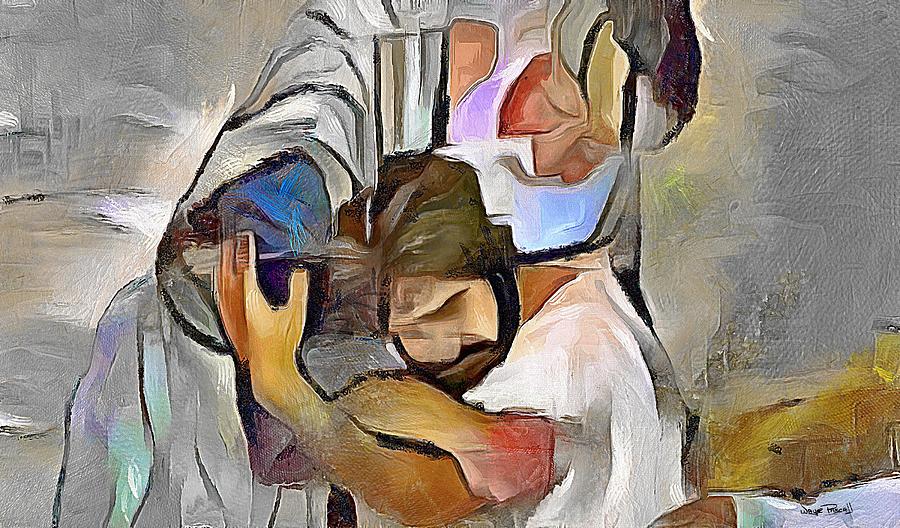
This dynamic is true for humanity as a whole, but it is important to understand it not just theoretically but in the way it actually plays out in our lives. A proclamation of emancipation only matters if a person actually experiences freedom as a result. That’s why each of us must recognize that, at a deep level, we are all like the younger son in the Gospel story. By our pride, by our greed, anger, lust, gluttony, selfishness, or whatever else, each of us has squandered our inheritance and gone away from the Lord, like wayward sheep seeking our own way. Unfortunately, like that young man finds out, choosing a path away from the love of our Father doesn’t lead us to success or self-fulfillment, but only to bitter disappointment and loss. However, God does not give up on us. If we can, by his grace, pick ourselves up and turn back to him, we will find that he always welcomes us back with warmth and love. In his house, we find freedom from our slavery, we find newness of identity, because Jesus the Son has made it possible for us to also be God’s beloved sons and daughters.
 
The Prodigal Son (2019) by Wayne Pascall

So, thanks be to God that what the scribes and Pharisees say is true: Jesus welcomes sinners, and communes with them. The Parable of the Prodigal Son is a symbolic explanation of God’s mercy, but that mercy is actually encountered not in a story but in real life. We need to experience it personally, and we do so most fully in the sacrament of penance. We will have an opportunity to participate in this sacrament again this week in our parish’s penance service on Tuesday evening. I encourage us all to come and make use of this great sacrament – if not here, then somewhere, before the end of Lent. Let’s do this even if – especially if – we have been away from the sacrament for a long time. There can be lots of things that might tempt us to stay away: perhaps fear, or shame, perhaps a past bad experience in confession, perhaps a lack of certainty about just where we are at spiritually, of what we need to confess and how we need to change. But don’t let any of those things be an obstacle that prevents you from making your way back to the Father’s house. If you trust that the Lord desires to unburden you and liberate you of your sins, and if listen to the voice of the Holy Spirit urging you to get up and return to the Father’s house, I know you will find the sacrament to be what I myself find it to be: an experience of reconciliation, of being welcomed back by the heavenly Father, who is always loving and merciful.

And if, for some reason or another, it's not possible for you to receive sacramental absolution at this time, don’t lose heart. Consider offering to God just a few words of sorrow for your sins, perhaps through an Act of Contrition, or a prayer of your own making. Tell him how much you regret going astray and how much you desire to be liberated from your sins and renewed in your spiritual life. I bet you’ll find that, much like the younger son in the Gospel, you will hardly begin to speak before the Father interrupts you with his mercy and assures you in some way of his abiding love.

Friends, as we continue our Lenten journey, let’s give thanks to God for the great Emancipation Proclamation he has given us in the love of his Son. We are journeying closer to the solemnities of the Lord’s Passover, the great celebration of his setting us free from sin and death by his Passion, Death, and Resurrection. In these last few weeks, let us set aside our pride and hesitance, and return to the Lord’s loving embrace. And as we prepare for this Eucharist, may we be reminded how it is here in this Sacrament where the Lord restores and renews us, giving us no manna as our food for the journey, but his own Body as our true and living Bread. May its graces enliven us and lead us onward to our rightful place, our place of rest, our true and heavenly homeland.

Sunday, March 13, 2022

Confirming Faith

Doubt and uncertainty are part of life. Sometimes we wrestle with those things right after putting ourselves forward boldly in some way. It’s not uncommon for a person who makes a big purchase to feel a little buyer’s remorse right afterward. Or a person who accepts a new job might second guess whether they made the right decision. Someone who declares their love for someone else may feel uncertain if that love is not immediately reciprocated.

And if we know what those experiences are like, in those situations or others like them, we also know, after a moment of doubt or uncertainty, how great it feels to be reassured. Maybe we receive a word of approval from someone else, or some sign that confirms that what we said or did, going out on a limb in some way, was the right thing. Today’s Gospel offers us just that kind of reassurance, if we understand it in its context. The Transfiguration of Jesus is a familiar story for us, but what exactly does it mean? Perhaps we feel we can understand more easily the parables of Jesus, or his words of admonition, or the stories of the miraculous healings he did. But this story is understood rightly only if we know what came right before it.

In all of the Gospels, Jesus’s Transfiguration is preceded by two things: first, the profession that Simon Peter makes in Jesus. Remember that episode? Jesus asks the disciples who people say that he is, and then he asks them who do *they* say that he is. And Simon Peter responds: “You are the Christ, the Son of God.” And Jesus confirms him. He says, “You’re right. And I will call you ‘Peter’, ‘Rock’, and upon you I will build my Church.” But immediately after this, Jesus tells the disciples something surprising – that he, the One whom they had just declared to be the Son of God, was going to Jerusalem to suffer and to die and rise again.

The Transfiguration of Jesus follows on these two things: Peter’s profession of faith and Jesus’s declaration that he’s going to be put to death. If we put ourselves in Peter’s shoes, perhaps that second part would have been enough to make us hesitate about the first. Peter’s conception of who the Messiah was, of who the Son of God was, certainly would not have included the idea of him being crucified. And so perhaps there was for him, and for the other disciples, a little uncertainty. Maybe a little bit of doubt crept in to their minds. Were they wrong about what they had declared – that Jesus was the Son of God?

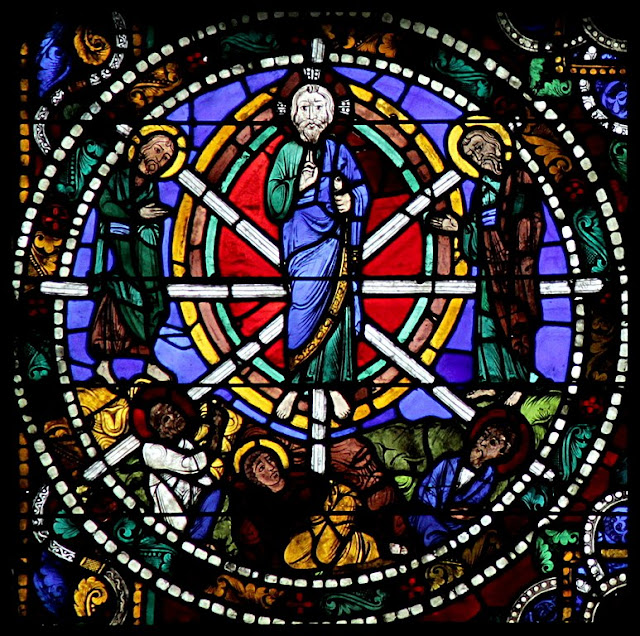
In today’s Gospel, Jesus answers that question with a definitive YES. The Transfiguration isn’t just a cool, random event – it’s a confirmation that Jesus really is who the disciples have professed him to be. To his inner circle, Peter, James, and John, Jesus gives them a glimpse of his own divinity as the Son of God, and as a sign to reassure them about his upcoming passion and death. St. Thomas Aquinas calls this the greatest miracle Jesus worked because it anticipates his Resurrection: it reveals the glory that Jesus possessed not only within himself but that which he promises to all who believe in him.

Stained Glass Image of the Transfiguration (13th cent.), Chartres Cathedral

In these days of Lent, we are encouraged to adopt certain practices of faith – prayer, fasting, and almsgiving especially. We do these as a sign of our repentance, but they have another purpose as well: that is, to strengthen our will and our spiritual insight. Like Peter, we are called to boldly proclaim our faith in Jesus, but at times, fear and uncertainty can afflict us, especially in times of difficulty or sorrow. The wearying and worrying things of life can get us down and perhaps tempt us to doubt the goodness of God the promises of our faith. In those moments, God wishes to reassure us, to confirm our faith, and to give us hope for the true reality – the heavenly reality – that lies under the surface of our everyday experiences. He does so by reminding us of what he has done in and through his Son; what is true of Jesus can be true of us, too, if we are conformed in the image of Christ.

And that’s where prayer, fasting, and almsgiving come in: they help us to grow a little more into the image of the One laid down his life for our salvation. When we deprive ourselves of material things, when we deny some of our earthly desires, we can focus more fully on spiritual things. And we begin to see, with spiritual sight, how God is confirming our faith, strengthening our hope, putting the challenges we face in the larger context of Jesus’s Passion, death, and Resurrection, and how we share in that. When our attention is focused less on earthly desires, God begins to train our hearts and minds to yearn for a happiness that goes beyond this life – that is satisfied only in the heavenly glory of the life to come.

Friends, let’s strive to let our faith be purified this Lent. Let’s not let doubt or hesitation creep in to our hearts but, like Peter, let’s be bold in proclaiming our faith and looking for the ways that the Lord reassures us in it. It’s important that we understand every day – all of our decisions and actions, and even our words – in the context of something greater: indeed, in the light of what St. Paul tells the Philippians in our second reading: “Our citizenship is in heaven, and from it we also await a savior, the Lord Jesus Christ.” It is He, who was Transfigured on the mountain, who is Risen and lives forever, who comes to us now, in our Sacrament of the Altar: to confirm our faith in him and strengthen our hope to share in his heavenly glory.

Sunday, March 6, 2022

Tested Together

Sometimes when I am thinking about what to say in my homily each week, I’ll go back and take a look at what I said in previous years on the same Sunday. I did that this past week, and saw that a year ago, the First Sunday of Lent came right after the double snowstorm, which left many people in our area and region in bitter cold and recovering from property damage and other aftermath for long after the snow and ice melted. And then two years ago, I saw that I encouraged us to shake up our routine for Lent, to not be afraid to live differently from how we were accustomed. And then, just a week or so after that, the pandemic began, and our lives changed much more radically than any of us could have imagined.

All of that is to say that sometimes we don’t have to go looking for struggles and hardships – they find us. All year round, we face them, in different ways, but in the season of Lent we look directly at our challenges, our trials, our sufferings, and we strive to accept them, with humility and with faith. We do that because when we suffer, there can at times be a temptation to think that God has forgotten us, that he’s not helping us, and that we are alone in what we face. In fact, this is maybe the most common way that people can lose their faith altogether, in whatever way that looks: when they come to believe that the very existence of struggle and suffering indicates that faith doesn’t do all that much for us.

It’s fortunate, therefore, that we begin each Lent hearing that Jesus himself struggled – that for forty days and nights he suffered hunger in the desert, and at the end of that time was tested by the devil. This Gospel episode is important for us in a couple ways. First, it shows us a preview of what Jesus will endure at the end of his life, in the testing of his Passion and Death. The Cross of Christ gives meaning to all suffering, since it is the path – the only path – to the Resurrection. All of Lent is directed in this way: to see our trials and testings in the light of that final reality – that is, not as meaningless experiences, but as preparations, steppingstones toward the light of heaven.

But today’s Gospel is important in another way, too, and that is as a sign of solidarity. In the temptations of Jesus, we see that the Son of God in his humanity really knew what it was like to endure testing and trial. You might say there is an exchange that happens. Jesus, the Word of God made Flesh, takes on himself the human experience of suffering and temptation, showing solidarity with us in our trials. In exchange, he offers us a share in his victory; because he resists the devil’s allurements, he shows us that in him we can do the same. Jesus is not just our Savior; he is our Salvation – he is literally the means by which we conquer the evils that we face. When we see God as not absent from our trials but very much entering into them – redeeming them and allowing us to overcome them through the presence of his Son – then it can change the whole way that we understand them and face them. We begin to understand that the Lord is not just with us – in our spiritual corner, so to speak – but even more, he is the one fighting within us. It’s his grace that enlivens us and helps us persevere, to overcome temptation and to endure suffering.

Moretto da Brescia, Christ in the Wilderness (c. 1520)

What’s more, the solidarity that Jesus shows us, and that he gives us with him, also allows us to show solidarity with others. St. Paul recommends just that in his Letter to the Romans: “Rejoice with those who rejoice, weep with those who weep. Live in harmony with one another” (Rom 12:15-16). Lent gives us a chance to recognize and even enter into the experiences of those with whom we are spiritually connected. Maybe that is a family member or a friend who we know is going through a rough time, and by prayer or generosity, we can show our support for them. Maybe it is to support in the same way those who, though distant from us physically, nonetheless are connected to us spiritually: Christians in Ukraine living in bunkers and risking their lives to protest an unjust invasion of their country; priests and catechists in China who have been arrested for their faith and will spend this Lent incarcerated; religious sisters and seminarians in Africa who face ongoing threat of kidnapping and other violence. With these and others, we recognize that we are united in Christ: “the same Lord is Lord of all,” he who is our Head enriches all of us in his Body, so that tested together in him, he sustains in our trials.

Friends, take some time this week to think about you’re being tested this Lent; but think also about how the Lord is with you in those trials, sustaining you, giving you faith and perseverance. And then consider how he’s inviting you to show your solidarity with others, just as he has shown his with you. How can you be the presence of Christ for another in these next forty days? May his Real, sacramental Presence be our food for the journey ahead.

Wednesday, March 2, 2022

Humble Repentance

Evil is real. That’s a basic truth that we hopefully agree with, one that our faith teaches. We tend to think of evil as external – as something outside of us, out in the world. The current war in Ukraine might be a good example and a painful reminder of that. But the Christian faith teaches, just as the Jewish faith before it, that human beings also must recognize that there is evil within our hearts. We heard about this idea just last Sunday, when Jesus said the fruit we bear in our lives is a reflection of what is within us. And so, because each of us has within us a mixture of some good and some evil, the idea of repentance is central and essential to our lives of faith – to recognize and turn away from that which has crept up within us that is not Godly and not in accord with what God calls us to.

The season of Lent, that we begin today, is the season of repentance par excellence. But even here there is a danger, one which Jesus talks about in our Gospel today. Even the desire to repent can become an opportunity for pride and for boasting, especially when we do it not for God but for others to see us. Isn’t there a little bit of that in how we typically approach Lent: “Oh, look at me and what I’m giving up! See these great and pious things that I am going to do to show my faithfulness!” I know that’s true in my life. Even our practice of coming to receive ashes – a good sign of our repentance – can be, if we are not careful, a temptation to feel self-righteous, to show off our penitence, and maybe even to think ourselves a little better than others.

Jesus tells us in the Gospel today that repentance is good – our works of fasting, prayer, and giving alms are good – but at the heart of them must be a spirit of humility. Do you remember the parable of the publican and the Pharisee in the Gospel of Luke, chapter 18? It could well be another passage to reflect on for Ash Wednesday. Both the Pharisee and the tax collector go to the temple to pray. But the Pharisee prays boastfully, thanking God that he is not like other people, that he prays and fasts much better than others, including the tax collector next to him. For his part, the tax collector only lowers his head and asks God to forgive him, and Jesus says that because of his humility he went away justified before God, while the Pharisee did not.

The Pharisee and the Publican by John Everett Millais (1864)

Friends, let’s make sure that’s we begin this Lent with that same spirit of humility. Our praying and fasting and almsgiving are good, we need to do them; but as Jesus says, we also have to guard against the temptation to take pride in them, as if we want others – or even just ourselves – to be convinced of our repentance. Maybe God isn’t so concerned with what we are giving up, or what we are going to do this Lent – in fact, maybe he prefers we keep those things to ourselves, since they are really just between us and him, anyway. Maybe he’s much more concerned with whether we’re doing whatever it is we are doing with a humble attitude. Maybe that’s the best way, in the end, to recognize what is not Godly within us, to repent of the evil present in our hearts, and to show God in these forty days how much we truly desire to return to him.

Sunday, February 20, 2022

Friends and Enemies

How many friends would you say you have? According to Facebook, I have some 3300 friends, but for some reason, I suspect the actual number is a bit lower than that. Whether you use Facebook or not, you probably agree that in our day and age the term “friend” and “friendship” have come to be used much more loosely than they once were.

What about the opposite – how many enemies do you have? I don’t have any enemies, according to Facebook at least; once again, I’m not sure that’s completely true. Most of us probably don’t think we have many enemies, if we have any at all – at least none that we know personally, that we interact with in daily life, that don’t live on the far side of the globe somewhere. For that reason, we might be tempted to dismiss what Jesus says to us in the Gospel today: “love your enemies, do good to those who hate you.” Perhaps we want to respond, “Okay, Jesus, but that doesn’t apply to me; I only have friends.”

But is that really accurate? What if we replaced the word “enemies” with a category that we might be more familiar with. Do you have any rivals? What about competitors, in business, perhaps? What about friends who are more like frenemies? What about relatives that we butt heads with, or neighbors that we don’t particularly like, or the people with whom we have had past disagreements and offenses and grudges. And then there are those who challenge us or push our buttons, those with whom we disagree politically, those who have cultural viewpoints or social priorities different from ours.

If we start to think about it that way, we see that what Jesus has to say in today’s Gospel probably applies to lots of people that we know. And what does he have to say? He challenges us, his disciples, to take an approach radically different from the one what we are naturally programmed to. It’s natural, Jesus says, to love those who love us, and to do good to those who do good to us; even sinners do that, he says. But Jesus calls us to a higher standard: the standard that he himself sets. Remember the words of John 3:16: “For God so loved the world that he gave his only Son, so that everyone who believes in him might not perish but might have eternal life.” And the words of St. Paul to the Romans: “God proves his love for us in that while we were still sinners Christ died for us… If, while we were enemies, we were reconciled to God through the death of his Son, how much more, once reconciled, will we be saved by his life” (Rom 5:8, 10).

Jesus Teaching His Disciples, Egyptian Gospel manuscript, c. 1684

In other words, Jesus came to save us despite the fact that we were wretched sinners – yes, enemies of God – to make us God’s friends by the shedding of his blood. To follow Jesus means, you might say, to override our natural programming of antagonism, self-defensiveness, “eye-for-an-eye, tooth-for-a-tooth” attitude, and instead be overcome by the supernatural love of Christ. In the love of Jesus, we can do what he commands: to do good to those who hate us, to bless those who curse us, to pray for those who mistreat us, to turn the other cheek, to give without expecting repayment, to stop judging, to stop condemning, to be merciful. Surely, we can do those things, if we remember the One who came to sae us was crucified our sake. Those things that would seem impossible by our own powers become possible in the light of Christ's love. 

It’s important to realize, however, that to love as Christ calls us to love doesn’t mean that we will never have enemies. I think we are called to see every person as potential friend in Christ, no matter what our differences might be, or what our past interactions have been, but sometimes it could be that we will make enemies precisely by standing up for what is true and good and just. So, we shouldn’t think that today’s Gospel is inviting us to some kind of idyllic, kumbaya existence; to follow Jesus means that we will suffer, because we will be called to set other priorities, even other relationships, secondary to the one we have with him. What today's Gospel does call us to, I think, is to guard our own reactions and responses, external and internal. We may not be able to always make others love us, but we can seek to love everyone – even those who hate us, especially those who hate us – because of the love of Christ.

So, friends, – and I hope I can rightly call you friends, in Christ – I’m sure over the course of the last few minutes, as I’ve talked, at least one or more persons have sprung to your mind. Maybe “enemy” wouldn’t be the first way you would describe them, but in some way or another your relationship with them is strained, you’ve suffered some insult or offense, you find that you just don’t want anything to do with them. But try to overcome that natural programming for a moment, and consider what the love of Jesus might be asking of you? Maybe it’s just to offer a prayer for them, or try to forgive them in your heart, or to recognize their humanity and indeed the image of God in them. But maybe the love of Christ – he who has made us friends out of enemies – maybe he is calling you to do something more: to reach out to them, to be open to being reconciled, to let whatever has come between you in the past be renewed in light of your friendship with Jesus.

After all, in the end it’s Jesus who should be our best and truest Friend, and with his grace, nothing is impossible – including making friends out of enemies. May this Eucharist bring us renewed strength from the Friend who is also our Savior, that he might strengthen us to love as he loved us, to do good to others as he showed us.

Sunday, January 30, 2022

Suffering Rejection with Love

In any sphere of human life, rejection is painful. Whether it’s being betrayed by a friend, or turned down for a job interview, or having a potential romantic partner not reciprocate interest, no one likes that feeling of being rebuffed for who we are or what we are about.

Despite being God’s Son, Jesus wasn’t spared this human reality of rejection, as we hear in today’s Gospel. This episode continues the story of last week’s Gospel, when Jesus was celebrated by the people of his hometown of Nazareth, who listened with rapt attention to what he had to say. Even in this story, we are told they were amazed by him and spoke highly of him. But by the end, when at last they find out that he’s not going to do what they want, and that his mission doesn’t conform with their expectations, their rejection of him is so great they literally throw him out of town.

This turn of events perhaps feels surprising, but upon reflection, it probably shouldn’t be. Jesus encountered rejection throughout his life, from his birth in Bethlehem, when King Herod seeks to kill him, to the final rejection of the crowds that cry “Crucify him!” I mentioned last week that Jesus has come to fulfill God’s promise of helping those in need, of bringing his joy, healing, and peace to those who were lowly. The reality though is that we human beings often reject those gifts; there is something deep within us that often recoils at what is good for us and rejects what we most need. We call that reality sin, when we choose other things and follow other desires instead of choosing God as our greatest good. God knew that, and sent his Son also for that reason – to confront our sinfulness, to lay it bare, and finally uproot and defeat it by his Cross, Death, and Resurrection. Even now, the reality of sin is present among us, even in us; though it’s been conquered, it continues to wage little skirmishes in our wills and egos.

The Brow of the Hill Near Nazareth (c. 1890) by James Tissot

Jesus was rejected because of sin in the human heart, and it’s for that reason that we wrestle with rejection, too. I mentioned last week that we share in the mission of Jesus; because we have been baptized in him, and are members of his One Body, we are also sent to those in need. But as we do that, we should recognize that at times, we will be rejected for our faith, and for our identity in Christ. It’s not a possibility; it’s a certainty – it happened to the Lord, and it will happen to us as well. Maybe it will be the scorn of those who mock our belief and our prayers; maybe it will be the rejection of those who say the Church needs to get with the times, or the silent rejection of those who walk way from it altogether; maybe it will be the scorn of those who don’t want to forgive, or work for justice, or seek peace and reconciliation. Often, it won’t be anything overt, but just hardened hearts, fractured relationships, and a temptation to make compromises in what we hold to be true.

In all these ways and more, rejection can be painful, as it surely must have been for Jesus, to have his own friends and neighbors, people who he’d known since childhood, drive him to the edge of town and want to throw him off a cliff. But notice how he responds. He doesn’t let the crowd’s anger and jealousy disturb him, but rather he passes peacefully through the midst of them. Jesus was focused on being faithful to his Father’s will, because he knew that his Father loved him. And that’s how he would have us respond too: with love. St. Paul, in fact, reminds us what that means in the second reading: responding with patience, kindness, not jealousy or rudeness, not being quick-tempered, not brooding over injury, but bearing and enduring all things. If you think about it, that’s a perfect description of Jesus himself, in this Gospel or any other. When we encounter rejection, we too can be Christ-like, confident in the love of the Father and the share we have in that.

There is one last piece to this puzzle, which is this: at times, we are the ones rejecting the Lord. Despite our faith in Jesus, despite our identity as part of his Body, at times we don’t want to accept what God wants to give us. We know that sin still has some hold over us. That’s why it can be okay, even good, for us to experience rejection from others. It can help to humble us, make us more patient and kind, and remind us perhaps of our own faults and sins, those areas of our lives where we need to stop keeping God at arm’s length. In the degree to which we need to still be purified of sinfulness, a little bit of suffering can help us to love the One who was crucified for us a little more and love ourselves a little less.

Friends, as Saint Paul reminds us, we’re all awaiting the day when we see God face to face, and can understand all of the experiences of this life, good and bad, in the way that he does. Until that time, let’s suffer rejection with love, and make sure our love for the Lord never leads us to reject him. For that, and for all of our prayers, may the grace of this Eucharist come to aid us.

Saturday, January 22, 2022

No Benchwarmers

Recently someone told me they were excited about a new tattoo they had gotten. I said, “Oh, really? What’s the image?” But it turns out it wasn’t an image of any thing, but just a few short words: a particular saying that this person felt was essential to who they are. This person never wanted to forget that saying’s relevance to how they want to live, and so they had it placed on the inside of their arm so they could be reminded of it any time they needed to be.

I think it’s safe to say that Jesus did not have a tattoo. The Levitical law prohibited them, so they were ruled out for faithful Jews. But, if Jesus had ever thought about getting one, he might have chosen some words from the passage we hear him proclaim in the Gospel today: “The Spirit of the Lord is upon me, because he has anointed me to bring glad tidings to the poor. He has sent me to proclaim liberty to captives and recovery of sight to the blind, to let the oppressed go free, and to proclaim a year acceptable to the Lord.” These words, written by the prophet Isaiah some 500 hundred years or so earlier, are now fulfilled, realized, in the person of Jesus. He didn’t need to inscribe them on his body because they were already written on his heart and his soul. Anointed with the Holy Spirit, Jesus announces to the people of Nazareth that he has come deliver and fulfill what God had promised to his people.

James Tissot, Jesus Unrolls the Book in the Synagogue (c. 1890)

And what is that? As we heard, joy, healing, and deliverance, especially to the lowly. Throughout the Old Testament, God had told his people that he had a special love and attentiveness for the poor, the oppressed, the captive, the widow and the orphan. Now, in Jesus, those who were most downtrodden received what they most needed: the sick will be healed, the blind and the lame cured, the sinner forgiven, even the dead raised. In Jesus, in his words and gestures and actions, those who were most broken and lowly experienced the love and the mercy and the favor of God.

And still today, God extends to us those same gifts of mercy and healing in and through Christ. Wherever we feel ourselves to be tired, downtrodden, sick, sinful, broken, God wants us to receive what we need most – an encounter with the healing and deliverance of Jesus. It’s true that we don’t experience that encounter in the same way as the people of Nazareth. The body of Jesus that they saw and heard and interacted with is now, we proclaim, glorified and at the right hand of the Father in heaven. But we still have access to that same healing and deliverance, that same Jesus, just in a different way: through the graces of his Mystical Body, the Church. In the preaching of God’s Word, in its missions of mercy and justice, in its pastoral care and accompaniment, the prayers and offerings of the liturgy, above all in the vehicles of grace that are the sacraments, Jesus continues to reach out to fulfill what God has promised to those in need. The Church is the living presence of Jesus, and guided by the Holy Spirit, she continues to minister to those in need in the world today.

But who is the Church? The Pope and the bishops? Yes, partly, but not the only part. In today’s second reading, St. Paul emphasizes to the Corinthians that the Church is made up of many parts, because as the Body of Christ, it has many members. “As a body is one though it has many parts, and all the parts of the body, though many, are one body, so also Christ. For in one Spirit we were all baptized into one body… You are Christ’s body, and individually parts of it.” So what does that mean? It means that along with the Pope and the bishops, all of us also are doing the work of the Church, because we are the Church too. We have been baptized into Christ. We have received the Holy Spirit. And so, we necessarily share in the Church’s identity and mission; we are part of that encounter between Christ and those in need.

And that, in the end, is why today’s Gospel is so important. It tells not just who Jesus is and what he is about, but also who we are and what we should be about too:“The Spirit of the Lord is upon us, because he has anointed us to bring glad tidings to the poor. He has sent us to proclaim liberty to captives and recovery of sight to the blind, to let the oppressed go free, and to proclaim a year acceptable to the Lord.” Jesus has healed and freed us in order to become sharers in his ministry to others. We might call this passage the Church’s mission statement – the purpose we are called to be faithful to, to never to forget its relevance for us, but to inscribe it in our hearts and our souls. In Jesus, God reaches out to heal and lift up those who are in need, and he calls us by our baptism to become part of that work, the work of the Body of Christ, the whole Church. Baptized in Jesus, sharing in his Spirit, we participate in preaching God’s word, in offering prayers and sacrifices, in working for justice and offering mercy, in accompanying those who are in need and leading them to the fullness of grace in the sacraments. None of us do that by ourselves; none of us can individually represent the whole Christ. It's only by all of us,  according to our own vocations, in the circumstances proper to each of us, that the ministry of the Lord is fulfilled. The Christian faith has no benchwarmers; we are all active, in the game, working together in our different ways, but united to each other, and above all united to Jesus in and through the Holy Spirit.

Friends, let’s approach this Eucharist today with hearts full of thanksgiving for what God has done for us and what he’s doing through us for others. He is allowing us, together – in many parts, but one Body – to fulfill his promise of healing and deliverance to those most in need. Let’s ask him to again renew us with his healing and mercy so that, renewed, we can be vehicles of those same gifts to those to whom he sends us.

Sunday, January 16, 2022

Miracle in the Mundane

I was chatting with some folks this past week about how short the Christmas season was this year. Part of that is because whenever we have a long Advent, as we did this year, the Church’s Christmas celebrations will necessarily be shorter. But part of the reason too why Christmas might feel like ages ago – even though Christmas Day was just three weeks ago yesterday – is that we’ve gotten back to the normal routine of daily life, with its various worries and difficulties. And now the new year has brought new challenges, too, like the recent surge in covid cases, that’s affected our lives and the lives of family and friends. It’s enough to leave us feeling stressed, maybe even a little depressed, wondering where all the joy of the holiday season went.

Fortunately, for those of us feeling a little down in the dumps, our readings today bring us some Good News. These first few weeks of Ordinary Time still contain vestiges of Epiphany-tide, a season we used to celebrate after Christmas where we continued to reflect upon what means to have God’s presence among us in the person of Jesus. One of the episodes for reflection in Epiphany-tide is precisely the story that we hear in the Gospel, the wedding feast at Cana.

Adam van Noort, Wedding at Cana (c. 1620)

At first glance, this first miracle of Jesus may seem a little unimpressive, perhaps even embarrassing for pious Christians. Is Jesus using his divine power to simply keep the party going? This superficial way of looking at things underestimates the value of what it means to have the God-Man fully with us and among us. His power is able to touch our reality – and yes, transform our lives – not only in big and showy ways but even in the more ordinary realities of daily life. It’s true that transforming water into wine is not as critically important as some of Jesus’s later miracles: healing the sick, curing the blind and the lame, raising the dead. But this first miracle of Jesus shows us the degree to which God desires to make even the ordinary parts of our lives extraordinary, and to bring his power to even the mundane challenges of our experience.

Of course, whether God will do that is partly dependent upon our response. “Do whatever he tells you,” Mary says to the servers. Maybe these servants had other thoughts about how to fix the problem, but they put their trust in the power of Jesus, even if it seemed pointless to believe wine could somehow come from plain water. Sometimes, we want God’s help in the really big matters – to fix that relationship, to get that big promotion, to help that family member with their illness or addiction, whatever it may be – but the rest of the time, we think we can handle things on our own. That’s not really an attitude rooted in faith, however. The likelihood is that unless we put ourselves in God’s hands in the smaller moments, with the more mundane matters, then we probably won’t really have sufficient faith that he can act in those larger ways. As Jesus tells the disciples in another part of John’s Gospel, “Without me, you can do nothing.” 

And friends, perhaps, that is the most important takeaway for us today. More than any thing God might fix in our lives, what we most truly need from him is he himself. It’s fine to ask for God’s help in big matters and small, in things that are very important and in the day-to-day things that we need routinely. But we should realize that what really keeps us going is not any blessing we may ask for, but rather our communion with him, and learning to rely totally upon that, and not anything else.

As we prepare to receive his Presence in the Sacrament of the Altar, let’s deepen our faith in his ability to do that: to help us to rely completely on him and on him alone. “Without me, you can do nothing,” Jesus says, and may we respond, “Yes, Lord, and with you, we can do anything, and with you, we need nothing more.”